Second Story Addition Cost in the Bay Area
Second story addition cost in San Jose and the Bay Area: $200,000-$400,000 for an 800 sq ft addition with mid-range finishes. Per-city pricing from a licensed architect-GC.
Written by Alex Hamilton Li, owner of Hamilton Exteriors. Architect and licensed General Contractor (CSLB #1078806), building in the Bay Area since 2018, with 500+ residential projects completed. GAF Master Elite roofing contractor and James Hardie Elite Preferred siding contractor.
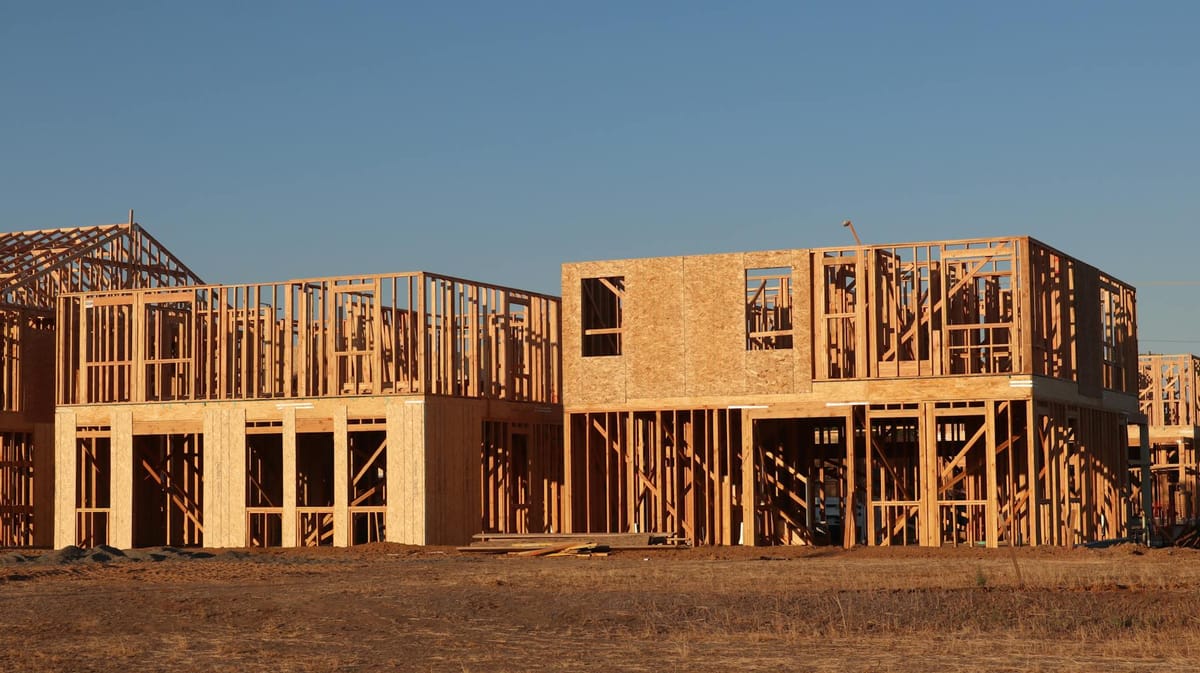
Adding a second story to your Bay Area home is one of the biggest residential construction projects you can take on — and one of the most rewarding. You double your living space without losing yard. But it's a major undertaking that requires honest budgeting. Here's what it really costs.
How Much Does a Second Story Addition Cost?
For a second story addition in the Bay Area (2026 pricing):
| Level | Cost per sq ft | Features |
|---|---|---|
| Budget level | $200-$275/sq ft | Standard finishes, builder-grade fixtures, straightforward floor plan |
| Mid-range | $275-$350/sq ft | Upgraded finishes, hardwood floors, custom cabinetry in bathrooms, higher-end windows |
| High-end | $350-$400+/sq ft | Custom everything — designer fixtures, specialty materials, complex architecture |
For a typical 800 sq ft second story addition (2 bedrooms, 1 bathroom, hallway), you're looking at:
| Range | Cost |
|---|---|
| Budget | $160,000-$220,000 |
| Mid-range | $220,000-$280,000 |
| High-end | $280,000-$320,000+ |
A larger 1,200 sq ft addition (3 bedrooms, 2 bathrooms) ranges from $240,000 to $480,000.
What Drives the Cost of a Second Story Addition?
Structural Engineering
This is the biggest variable that separates a second story from other additions. Your existing home was designed to support one story. Adding a second story means the foundation, walls, and connections all need to handle the additional weight.
Engineering requirements typically include:
| Structural Upgrade | Description | Cost |
|---|---|---|
| Foundation reinforcement | Most pre-1980 Bay Area homes need foundation work — adding piers, widening footings, or sistering the existing foundation. | $20,000-$60,000 depending on soil and existing foundation condition. |
| Shear wall upgrades | First floor walls need to transfer lateral loads (earthquake forces) from the new second story to the foundation. This often means adding plywood shear panels, hold-downs, and new connections. | $15,000-$35,000 |
| First floor framing reinforcement | Existing ceiling joists (now your second floor joists) may need to be sistered or replaced to handle floor loads. | $8,000-$20,000 |
Engineering fees alone run $8,000-$20,000 for a second story project in the Bay Area. This is not a place to cut corners — we're in earthquake country.
Temporary Roof Removal
Your existing roof comes off entirely. A temporary weather protection system goes up (think industrial-scale tarping) to keep your home dry during construction. This adds $5,000-$15,000 to the project and is logistically one of the most complex parts of the build.
New Roof
Every second story addition includes a complete new roof. The roof cost is typically $15,000-$35,000 depending on material and complexity, built into the per-square-foot price.
Stairs
You need a staircase to get upstairs. Stairs consume 80-120 sq ft of your first floor — that's space you lose downstairs but gain in access. A standard staircase costs $5,000-$15,000; a custom design with hardwood treads and a distinctive railing can run $15,000-$30,000.
HVAC Extension
Your existing heating and cooling system probably can't handle the added square footage. Options:
| Option | Cost | Notes |
|---|---|---|
| Extend existing ductwork + upgrade furnace | $8,000-$15,000 | |
| Add mini-split system for second floor | $6,000-$12,000 | popular choice — independent climate control |
| Complete HVAC replacement | $15,000-$25,000 |
How Long Does Permitting Take for a Second Story?
Second story additions require more extensive permitting than a simple remodel. Expect:
| Phase | Duration |
|---|---|
| Design and engineering | 8-16 weeks |
| Plan check (city review) | 6-12 weeks (varies significantly by city) |
| Total pre-construction | 4-7 months before the first hammer swings |
Cities with historically longer review times for second story additions:
| County | Review Process | Timeline |
|---|---|---|
| Berkeley | Design review required if visible from the street. Can add 2-3 months. | 2-3 months |
| Piedmont | Very detailed design review process. | 3-4 months |
| Mill Valley and Marin cities | Neighborhood notification and potential design review. | 2-4 months |
| Palo Alto | Stringent privacy protections and setback rules. | 2-3 months |
How Long Does Second Story Construction Take?
Once permits are approved:
| Phase | Duration |
|---|---|
| Foundation work | 2-4 weeks |
| First floor structural upgrades | 2-3 weeks |
| Roof removal and second floor framing | 3-5 weeks |
| Rough mechanical (electrical, plumbing, HVAC) | 2-3 weeks |
| Insulation and drywall | 2-3 weeks |
| Finish work (flooring, trim, paint, fixtures) | 4-6 weeks |
| Final inspections and punch list | 1-2 weeks |
Total construction time: 4-6 months for a typical second story addition.
From design kickoff to move-in: expect 9-14 months total.
Where Do You Live During a Second Story Addition?
Can you live in your home during a second story addition? Technically, sometimes. Practically, it's rough.
During the roof removal and framing phase (4-8 weeks), your home is effectively a construction site with limited weather protection. Most families move out during this phase — either to a rental, a family member's home, or a short-term rental. Budget $3,000-$8,000/month for temporary housing in the Bay Area.
Once the new roof is on and the home is weathertight again, many families move back in and live through the finish work. It's noisy and dusty but doable if you're patient.
ROI: Is a Second Story Worth It?
In the Bay Area housing market, the math usually works:
| Item | Value |
|---|---|
| Average cost of 800 sq ft second story | ~$240,000 |
| Value added to home | $300,000-$500,000+ depending on neighborhood and quality |
| Net ROI | 25-100%+ |
In desirable neighborhoods (Rockridge, Crocker Highlands, parts of San Mateo, Los Gatos), a second story can add significantly more than it costs. A 3BR/1BA home that becomes a 5BR/3BA home jumps into an entirely different buyer pool.
Compare this to buying a bigger home: in many Bay Area neighborhoods, the price difference between a 1,400 sq ft home and a 2,200 sq ft home is $400,000-$800,000. Building up is almost always cheaper than buying up.
How Does a Second Story Compare to Other Expansion Options?
Before committing to a second story, consider whether these alternatives meet your needs:
| Option | Details |
|---|---|
| Rear addition | Cheaper per square foot but uses yard space. Good if you only need 200-400 sq ft. |
| ADU | Separate structure in your backyard. Good for rental income or multigenerational living, but doesn't expand your main home. |
| Basement conversion | Not common in the Bay Area (most homes don't have basements), but possible in some older homes. |
Second story addition cost by Bay Area city
Second-story addition pricing varies by labor market, permit complexity, and whether your existing foundation will need significant retrofit. Here is what we typically see for an 800 sq ft second-story addition with mid-range finishes:
| City | Typical 800 sq ft addition | Plan-check timeline | Notes |
|---|---|---|---|
| San Jose | $220,000-$300,000 | 3-5 months | San Jose's plan check is generally efficient, but historic Willow Glen and Naglee Park homes often need foundation upgrades pushing cost to the upper end. |
| Oakland | $240,000-$330,000 | 3-6 months | Pre-1950 Craftsman and Tudor stock in Rockridge, Glenview, and Crocker Highlands almost always require foundation reinforcement and seismic shear walls. |
| San Francisco | $280,000-$400,000 | 6-12 months | SF's Planning + DBI process is the most complex in the Bay Area. Discretionary review and neighbor notification are common. Tight access drives labor cost. |
| Concord | $200,000-$280,000 | 3-4 months | One of the more affordable East Bay markets. 1960s-80s tract homes typically need slab-foundation upgrades, but the math still works given lower land cost. |
| Richmond | $195,000-$275,000 | 3-5 months | Lowest-cost inner-Bay market for second stories. Older homes from the 1940s-60s typically need foundation and seismic upgrades. |
| Walnut Creek | $220,000-$310,000 | 3-6 months | Newer 1970s+ construction often has adequate foundations; an engineer's letter is sometimes enough. |
| Berkeley | $245,000-$340,000 | 4-8 months | Berkeley's design review adds 2-3 months but produces high-quality outcomes that protect resale value. |
| Palo Alto | $280,000-$380,000 | 6-12 months | Palo Alto's Architectural Review Board, daylight-plane rules, and privacy setbacks make second stories some of the most engineered projects in the Bay Area. |
| San Mateo | $240,000-$330,000 | 4-7 months | Peninsula labor and inspection backlogs add roughly 4-6 weeks vs. East Bay. |
| Mountain View | $240,000-$330,000 | 3-6 months | 1950s ranch homes usually need foundation reinforcement; tech-driven home values make ROI strong. |
| Sunnyvale | $235,000-$325,000 | 3-5 months | Streamlined permitting; foundation upgrades typical on pre-1980 stock. |
| Fremont | $220,000-$300,000 | 3-5 months | Larger lots in Mission San Jose make site logistics simpler, lowering labor cost. |
| Hayward | $200,000-$280,000 | 3-5 months | One of the most cost-effective Alameda markets for a second-story addition. |
| San Rafael | $245,000-$340,000 | 4-7 months | Marin's hillside lots and stricter review add cost; views often justify it. |
For a city-specific scope and price, see our second-story addition page or browse San Jose, Oakland, and Concord service areas.
When a second story is the right choice
A second-story addition is the right move in three common Bay Area scenarios:
- You love your lot and your neighborhood but need more space. Bay Area teardown-and-rebuild costs $1.2-2.5M before you turn a screw. A well-executed second-story addition gets you 50-100% more square footage at 25-40% of the cost, and you keep the exact street, schools, and trees you bought into.
- Your yard is non-negotiable. If your back yard is your kids' play space, your garden, your dog's run, or a future ADU site, you cannot afford to give up footprint to a ground-floor addition. A second story preserves the lot.
- Your home is on a small or oddly-shaped lot. Many Bay Area lots have setbacks that make ground-floor expansion impossible. Going up is often the only buildable direction.
When a second story is not the right call
We will tell you when not to do it. Skip the second story if:
- Your foundation is severely compromised. Some pre-1940 perimeter or stone foundations require near-total replacement to support a second story. At that point, a strategic teardown and rebuild may have better economics.
- You are planning to move within 5 years. The premium for a second story rarely returns inside 5 years; ground-floor additions and kitchen/bath remodels usually have stronger short-horizon ROI.
- Your roof is a complex hip or pyramid. Some rooflines turn a "simple" addition into a custom architectural project that triples engineering hours.
- City rules effectively prevent it. Daylight planes, view ordinances (Berkeley, Mill Valley, parts of Marin), or HOA architectural restrictions can make a buildable second story uneconomical. We can run a feasibility check before you commit.
How Hamilton Exteriors handles second-story additions
We are an architect-led design-build firm and a licensed General Contractor (CSLB #1078806). For second-story additions specifically, that combination matters because:
- One contract, one team, one accountable owner. The architect, structural engineer, project manager, and crews all answer to us. You are not the integrator.
- Foundations, framing, and finishes under one roof. The same team that designs your shear walls is the team that installs them. No coordination loss between separate firms.
- 60-day permit guarantee on most jurisdictions. If we miss the agreed plan-check window because of something we control, we credit your project.
- Bay Area focused since 2018, 500+ residential projects completed. We know the quirks of every major Bay Area building department.
We are happy to do a free feasibility consultation that includes an existing-foundation assessment, daylight-plane and setback review, and a city-specific permitting timeline. Visit our second-story addition page or check coverage on our San Jose, Oakland, and Concord service area pages.
Financing a second-story addition
Most Bay Area homeowners finance a second story through one of:
- HELOC (home equity line of credit). Borrow against existing equity at variable rates, draw funds as construction progresses. Most common option for homeowners with significant equity.
- Cash-out refinance. Replace your existing mortgage with a larger one and take the difference in cash. Best when current mortgage rates are at or below market.
- Renovation loans (Fannie Mae HomeStyle, FHA 203(k)). These let you borrow against the projected post-renovation value of your home, useful when current equity is limited.
- Construction-to-permanent loans. A two-phase loan that funds construction, then converts to a standard mortgage. More paperwork but locks in a single rate.
We are not a lender, but we have worked with most major Bay Area banks and credit unions and can point you to lenders who understand large residential additions.
From Alexander: The Honest Truth About Second Stories
A second story addition is the most complex residential project we do. It touches every system in your home — structural, electrical, plumbing, HVAC, and the roof. It requires an architect, a structural engineer, and a general contractor who can coordinate all of it.
I hold both an architecture background and a general contractor's license (CSLB #1078806) specifically because projects like this suffer when design and construction don't talk to each other. When I design a second story, I'm thinking about how to build it efficiently. When I build it, I know exactly what the design intent is. That coordination saves time, money, and headaches.
Frequently asked questions
How much does a second-story addition cost in San Jose?
An 800 sq ft second-story addition in San Jose typically costs $220,000-$300,000 in 2026 with mid-range finishes. Larger 1,200 sq ft additions run $300,000-$420,000. San Jose's plan check is generally efficient at 3-5 months, but pre-1950 homes in Willow Glen and Naglee Park often need foundation upgrades that push you to the upper end of the range. Engineering fees add $8,000-$20,000 and structural foundation work adds $20,000-$60,000.
How much does a second-story addition cost in Oakland?
Oakland second-story additions typically run $240,000-$330,000 for an 800 sq ft addition with mid-range finishes. Pre-1950 Craftsman and Tudor homes in Rockridge, Glenview, and Crocker Highlands almost always require foundation reinforcement and seismic shear-wall upgrades, which is why Oakland sits slightly above San Jose on price.
How much does a second-story addition cost in San Francisco?
SF second-story additions are the most expensive in the Bay Area at $280,000-$400,000 for 800 sq ft. The San Francisco Planning Department and DBI process is the most complex in the region. Expect 6-12 months of permitting including possible discretionary review and neighborhood notification, plus higher per-hour labor and tight-site logistics.
How much does a second-story addition cost in Concord?
Concord is one of the more affordable Bay Area markets for a second story at $200,000-$280,000 for 800 sq ft. Most 1960s-80s tract homes here need slab-foundation reinforcement, but the lower land cost and faster 3-4 month plan check keep total project cost down.
How much does a second-story addition cost in Richmond?
Richmond second-story additions typically cost $195,000-$275,000 for an 800 sq ft addition. Richmond is the lowest-cost inner-Bay market for this type of project. Older 1940s-60s homes typically need foundation and seismic upgrades, but the rest of the build is meaningfully cheaper than Marin or the Peninsula.
Is a second story or a ground-floor addition cheaper?
Per square foot, a ground-floor addition is usually 15-25% cheaper because it avoids temporary roof removal, structural foundation upgrades, and a new staircase. However, ground-floor additions consume yard, while a second story preserves your lot. If your yard is your kids' play space or your dog's run, a second story is often the better long-term choice even at the higher per-square-foot cost.
How long does a second-story addition take from start to finish?
Plan on 12-20 months from signed contract to keys: 2-4 months for design and engineering, 2-6 months for plan check (varies by city), and 5-9 months for construction. The big variables are city plan-check speed and discoveries during foundation exposure. Hamilton Exteriors offers a 60-day permit guarantee on most jurisdictions.
Do I need an architect for a second-story addition?
Practically, yes. A second-story addition involves structural engineering, lateral seismic design, daylight-plane and setback compliance, energy code, and exterior coordination with the existing home. Hamilton Exteriors is architect-led so design and construction sit under one roof. That coordination is what keeps a second-story project on schedule and on budget.
Ready to Explore a Second Story?
If you're thinking about adding a second floor to your Bay Area home, the first step is a feasibility assessment. We'll look at your existing foundation, framing, and lot to determine what's possible — and give you a realistic budget range. Request a consultation.
We design and build second story additions across Alameda County, Contra Costa County, Santa Clara County, and the greater Bay Area.
Sources & Further Reading
For more information, check these resources:
• GAF Roofing Products — shingle specs, warranties, and certified contractor info
• ENERGY STAR Roof Products — energy-efficient roofing that qualifies for rebates
• CSLB License Lookup — verify any California contractor license