Bay Area Fire Zone Roofing: What Homeowners Need to Know
If you live in the hills, near open space, or anywhere the urban edge meets wildland, your roof isn't just keeping out rain — it's your first line of defense against wildfire. Research from the Insurance Institute for Business & Home Safety (IBHS) shows that Class A fire-rated roofing materials reduce structure ignition risk by up to 90% during ember exposure events. Here's what Bay Area homeowners in fire zones need to know about roofing materials, building codes, and insurance.
What Are WUI Zones?
WUI stands for Wildland-Urban Interface. These are areas where homes sit close to undeveloped wildland vegetation. California maps WUI zones through CAL FIRE's Fire Hazard Severity Zone (FHSZ) system, which classifies areas as Moderate, High, or Very High fire hazard. Under California Building Code Chapter 7A, all new roofs and re-roofs in Very High fire zones must meet Class A fire-rating requirements.
In the Bay Area, large sections of the following areas are in High or Very High fire zones:
- Oakland Hills and Montclair
- Berkeley Hills
- Orinda, Lafayette, Moraga
- Walnut Creek (eastern portions)
- Much of Marin County — Mill Valley, San Anselmo, Fairfax, Lucas Valley
- Parts of Napa Valley
- Los Gatos, Saratoga, Los Altos Hills
- Fremont (Mission Peak area)
You can check your property's fire zone at CAL FIRE's FHSZ map.
The Oakland Hills Fire: A Lesson That Still Matters
On October 20, 1991, a firestorm tore through the Oakland Hills. 25 people died, 150 were injured, and 3,354 homes were destroyed in a matter of hours. The fire jumped an 8-lane freeway.
The investigation found that wood shake roofs were a primary factor in how quickly the fire spread. Burning embers landed on wood shake roofs blocks ahead of the fire front, igniting new fires. The homes that survived were disproportionately those with tile, slate, or composition roofs.
This fire changed California building codes permanently. Chapter 7A of the California Building Code now requires specific fire-resistant construction in WUI zones — and the roof is the most important element.
Chapter 7A Roofing Requirements
If your home is in a designated WUI zone and you're doing a reroof (replacing more than 50% of the roof covering), you must comply with Chapter 7A. Here's what that means for your roof:
- Class A fire-rated roofing assembly — this includes the roofing material, underlayment, and deck, tested together
- No wood shakes or shingles — even "fire-treated" wood shakes are no longer allowed in Very High FHSZ
- Ember-resistant vents — attic and ridge vents must be ember-resistant (1/16" or 1/8" mesh)
- Gutters — noncombustible gutters required (no vinyl)
Which Roofing Materials Meet Fire Zone Requirements?
All of these achieve Class A fire rating when properly installed:
Asphalt Shingles (Class A)
Most modern fiberglass-mat asphalt shingles are Class A rated. Products like GAF Timberline HDZ and CertainTeed Landmark carry Class A ratings and are the most affordable fire-code-compliant option. They won't ignite from ember exposure.
Metal Roofing (Class A)
Metal is inherently noncombustible. Standing seam steel and aluminum roofs are the gold standard for fire resistance. They're increasingly popular in Bay Area fire zones — we've seen a significant uptick in metal roof installations in Oakland Hills and Marin since 2020.
Concrete and Clay Tile (Class A)
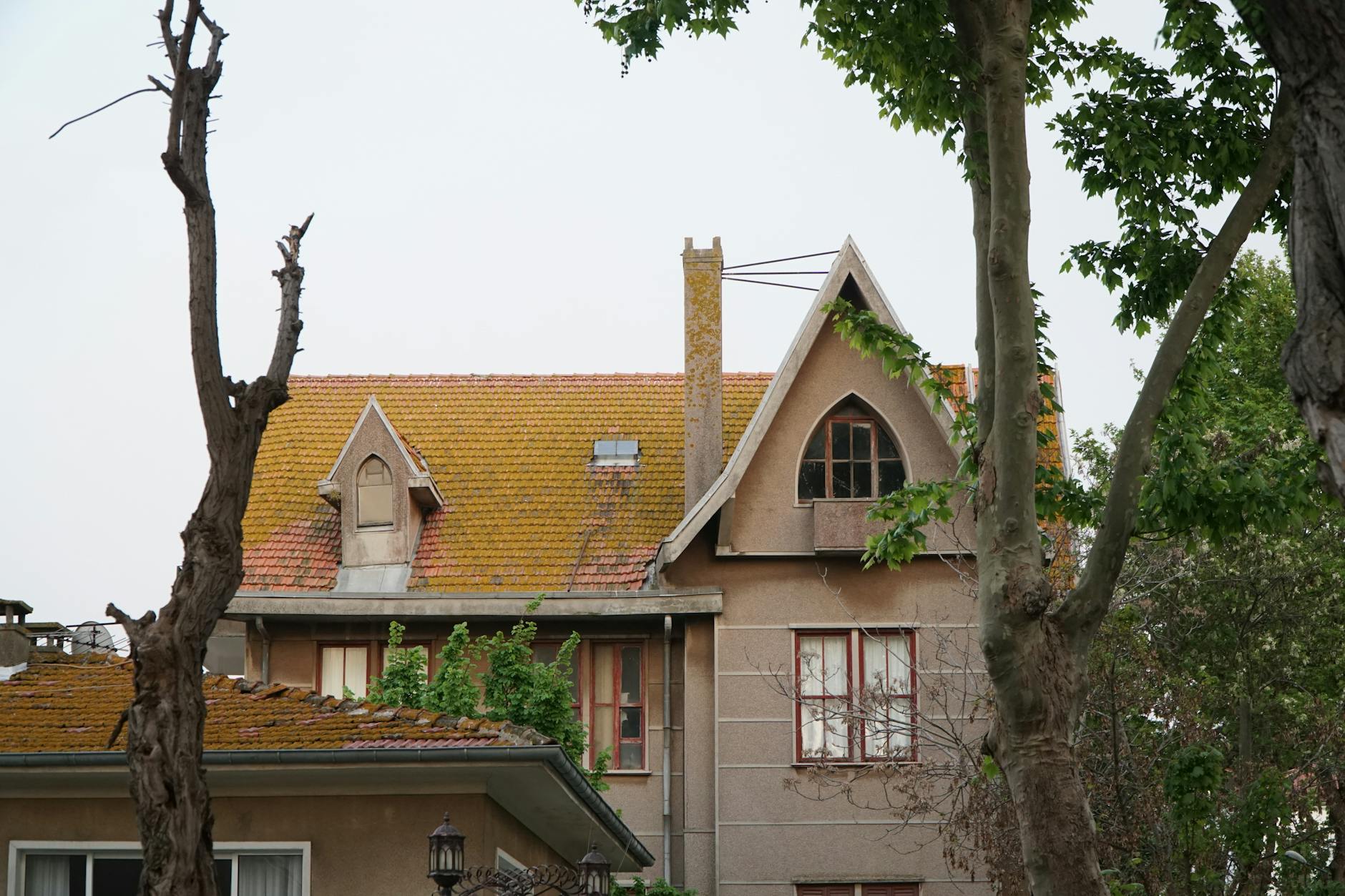
Tile roofs are noncombustible and common on Mediterranean and Spanish-style Bay Area homes. They meet Chapter 7A requirements and add a hefty layer of protection. The downside is weight — your roof structure needs to handle it.
Composite/Synthetic Shingles (Class A)
Products like DaVinci and Brava synthetic shake give you the wood look without the fire risk. They are Class A rated and look convincing from the ground.
Insurance and Fire Zones
This is where things get real for Bay Area homeowners. Insurance companies are pulling out of fire-prone areas at an alarming rate. State Farm, Allstate, and others have stopped writing new policies in parts of the Oakland Hills, Marin, and the East Bay hills.
If you can get insurance, your roofing material matters. Many carriers offer discounts (10-20%) for Class A fire-rated roofs, and some specifically discount metal roofs. Conversely, a wood shake roof in a fire zone can make your home uninsurable on the standard market.
When we reroof homes in fire zones, we provide documentation of the fire rating for every component — roofing, underlayment, vents, gutters — so homeowners can submit it to their insurance company.
Cost Impact of Fire Zone Requirements
The honest truth: roofing in a fire zone doesn't have to cost dramatically more than standard roofing. Class A asphalt shingles cost the same as any other asphalt shingle. The extra costs come from:
| Requirement | Cost Impact |
|---|---|
| Ember-resistant vents | $300-$800 more than standard vents |
| Noncombustible gutters: Aluminum instead of vinyl | Marginal cost difference |
| Enhanced underlayment: Some fire zones require specific fire-resistant underlayment | $500-$1,500 |
| Inspection requirements: Additional inspections may be required | $200-$500 in fees |
Total additional cost for Chapter 7A compliance on a typical reroof: $1,000-$3,000. Not nothing, but not the budget-buster some people fear.
Defensible Space: The Other Half of the Equation
Your roof is only part of the picture. California law (PRC 4291) requires homeowners in fire zones to maintain defensible space:
- Zone 0 (0-5 feet from home): Noncombustible materials only — no plants, mulch, or fencing touching the house
- Zone 1 (5-30 feet): Lean, clean, and green — trimmed, well-watered vegetation, no dead plants
- Zone 2 (30-100 feet): Reduced fuel — spaced trees, cleared undergrowth
The best roof in the world won't save your home if dead brush is stacked against the foundation.
From Alexander: Building in Fire Country
I've reroofed dozens of homes in the Oakland Hills and Marin fire zones. The homeowners who sleep best at night are the ones who took a whole-house approach — fire-rated roof, ember-resistant vents, hardened eaves, fiber cement siding, and maintained defensible space. It's not just about checking a code box. It's about actually protecting your family and your biggest investment.
If you're in a fire zone and your roof is aging, don't wait. The combination of fire risk and insurance pressure means this is a project that gets more expensive and more urgent every year.
Get a Fire Zone Roof Assessment
We offer free roof assessments for Bay Area homes in fire zones. We'll evaluate your current roof, identify compliance gaps, and provide a detailed quote for bringing your home up to Chapter 7A standards. Request your assessment.
Learn more about our roofing services or explore our service areas across the Bay Area.
Sources & Further Reading
For more information, check these resources:
• GAF Roofing Products — shingle specs, warranties, and certified contractor info
• ENERGY STAR Roof Products — energy-efficient roofing that qualifies for rebates
• CSLB License Lookup — verify any California contractor license